Commercial pools operate under stringent expectations when it comes safety, cleanliness, and regulatory compliance. Since dozens or even hundreds of swimmers share the same water, the reliability of the water treatment process directly impacts public health and facility performance. For aquatic facilities, choosing a commercial water treatment system requires careful evaluation of water quality, filtration capacity, sanitation technology, and operational needs.
Unlike residential pools, commercial pools must maintain consistent water purification despite heavy usage and frequent contamination from sunscreen, sweat, cosmetics, and environmental debris. When water treatment systems are poorly designed or undersized, the pitfalls appear immediately: cloudy water, strong chemical odors, and a greater risk of microbial growth.
A properly engineered commercial water treatment system improves water quality, supports regulatory compliance, and creates a safer and more enjoyable guest experience. Effective water purification also protects expensive equipment by preventing scale buildup, corrosion, and contamination within the broader commercial water system.
For facility managers, the decision is about finding the right balance between filtration, sanitation, automation, and maintenance requirements to create a reliable long-term strategy.
Understanding Your Pool Facility’s Water Treatment Needs
Every aquatic facility comes with a unique set of water treatment requirements. The size of the pool, swimmer load, and source water conditions all influence which commercial water treatment solutions will work best.
Pool Type & Usage Profile
Different aquatic environments place different demands on water filtration and sanitation systems. Competition pools often prioritize crystal-clear water for visibility and athlete performance. Meanwhile, leisure pools and waterparks handle higher bather loads, increasing the need for strong filtration and reliable water purification.
Facilities with spas, splash pads, or therapy pools face additional challenges because warmer water increases chemical consumption and microbial growth potential. Indoor pools must also manage air quality because chloramine buildup can occur when water purification is insufficient.
Each of these differences explain why aquatic facilities often require custom water treatment systems rather than standardized, one-size-fits-all equipment packages.
Bather Load & Turnover Rate
Bather load direct connects to water quality. Each guest introduces organic contaminants that quickly degrade disinfectant levels; high swimmer density increases the need for efficient filtration and faster turnover rates.
Commercial pools therefore rely on water filtration systems capable of continuously removing suspended particles. Strong water filtration improves sanitizer performance by reducing organic contamination before it reacts with disinfectants. Facilities with heavy usage may use technology similar to industrial water treatment equipment to keep stable conditions.
Source Water Quality
Fill water quality plays an important role in long-term pool chemistry, as source water may contain minerals such as calcium or iron that influence scaling and staining.
Facilities located in regions with hard water often turn to water softeners to reduce mineral buildup. Using a water softener helps stabilize water quality and reduce strain on heaters and piping.
Baseline water quality testing helps identify hardness, metals, and total dissolved solids in the incoming water. This data informs better water treatment planning, allowing operators to select the appropriate water filter, water filters, or pre-treatment system.
Core Components of Commercial Pool Water Treatment Systems
Modern aquatic facilities count on several technologies working together to maintain safe water conditions. A complete commercial water treatment system combines filtration, sanitation, and monitoring technologies.
Filtration Systems
Filtration is the foundation of effective water treatment because it removes suspended particles that cloud water and interfere with sanitizers.
Common water filtration methods used in commercial pools:
- Sand filtration
- Cartridge filtration
- Diatomaceous earth (DE) filtration
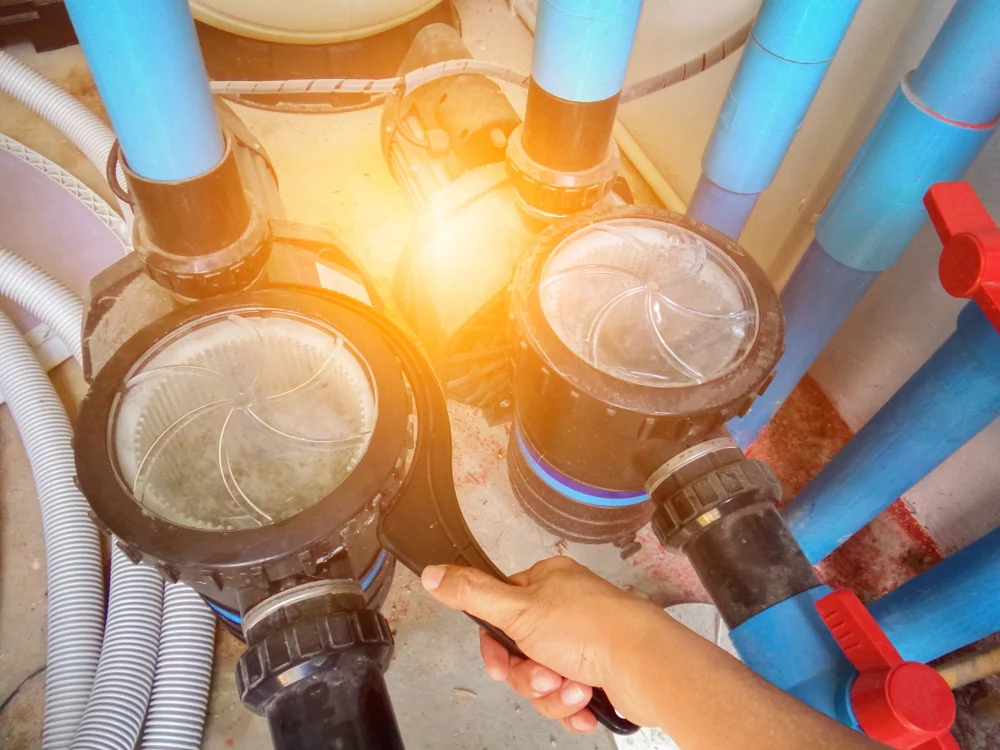
Each approach functions as a specialized water filtration system designed to remove different particle sizes. For example, sand systems provide durable high-flow filtration, while DE filters capture very small particles for superior clarity. Cartridge filters require less backwashing, but they need routine cleaning.
Technologies are often tied together into a larger commercial water filtration system that uses multiple water filters to maintain performance. Strong commercial water filtration also supports overall water purification and protects downstream equipment. Many aquatic facilities treat this infrastructure similarly to industrial water filtration systems used in manufacturing or utilities.
Primary Sanitation Systems
Sanitation is achieved through controlled dosing of water treatment chemicals that destroy bacteria and viruses in the water.
Chlorine remains the most widely used disinfectant as it provides a measurable residual. Facilities can use liquid chlorine feed systems, tablets, or salt-generated chlorine systems.
However, these chemical programs require strict attention to chemical safety in water treatment, including proper storage, ventilation, and staff training.
Secondary Disinfection & Oxidation Systems
Secondary treatment technologies help improve water purification and reduce chloramine formation.
UV systems and ozone systems are two common examples; these technologies deactivate chlorine-resistant pathogens and improve indoor air quality by reducing combined chlorine compounds.
For many facilities, secondary treatment is an important step toward sustainable water treatment practices because it can reduce chemical demand and stabilize water quality.
Water Balance & Chemical Automation
Automation systems help operators maintain consistent water treatment conditions. Sensors monitor pH and oxidation-reduction potential (ORP), allowing automated adjustments to chemical dosing.
Real-time monitoring benefits water purification and reduces manual chemical handling. Automation also minimizes labor and streamlines the documentation required for regulatory inspections.
Key Factors When Choosing a Pool Water Treatment System
Selecting equipment requires evaluating several operational and regulatory factors:
1. Health Department Codes & Compliance
Commercial aquatic facilities must meet strict environmental regulations for water established by state and local health departments.
Many jurisdictions reference the CDC Model Aquatic Health Code when developing inspection standards. Facilities need to document sanitizer levels, pH, and testing procedures to maintain compliance.
2. Safety for Staff and Swimmers
System design also affects operational safety. Chemical storage systems must limit exposure risks, and ventilation is necessary to prevent harmful fumes. Automation technology can mitigate manual handling of water treatment chemicals, improving overall safety.
Reliable water purification protects swimmers by preventing contamination events and achieving safe sanitizer levels.
3. System Scalability & Future-Proofing
Aquatic facilities often expand over time. New features, increased attendance, or regulatory changes can spur the need for system upgrades. Modular water filtration systems and expandable water treatment technology allow facilities to scale capacity without replacing the entire system.
4. Maintenance Burden & Operational Simplicity
Maintenance requirements vary significantly between the technologies. Filter backwashing, sensor calibration, and replacement schedules all affect staffing needs.
With that in mind, systems designed for simple operation reduce downtime and help maintain stable water quality. Consistent maintenance of water treatment systems is integral to long-term reliability.
5. Total Cost of Ownership (TCO)
Initial purchase price rarely reflects the true cost of water treatment.
Facilities should evaluate chemical consumption, energy usage, maintenance requirements, and equipment lifespan. A detailed cost analysis of water treatment helps decision-makers compare expenses over the long-term. Efficient commercial water purification systems often end up reducing chemical demand and boosting energy efficiency.
Common Mistakes When Selecting Pool Water Treatment Systems
Several simple mistakes can undermine a facility’s water treatment strategy.
Undersized systems are one of the most frequent issues. When filtration capacity is too low, contaminants accumulate faster than the system can remove them.
Facilities sometimes ignore secondary treatment technologies, which can lead to persistent chloramine buildup in indoor pools. Poor integration between water filtration, sanitation systems, and chemical feed equipment can also disrupt water purification.
Another common oversight is failing to evaluate indoor air quality. Without adequate ventilation and secondary disinfection, chloramines can create unpleasant odors and swimmer discomfort.
Most notably, selecting equipment based solely on the sale price often results in higher operational costs over time.
Optimize Pool Water Treatment Systems with Professional Help
Professional consultation can significantly improve water treatment outcomes for aquatic facilities.
Specialists start with a system audit that evaluates existing water filtration, circulation rates, and chemical management practices. From there, engineers develop water treatment system design plans tailored to the facility’s exact operating conditions. This process can include recommendations for improved commercial water filtration, automation upgrades, and updated chemical programs.
Facility managers seeking a more holistic strategy can explore commercial water management practices that increase overall system efficiency. Facilities should also review appropriate commercial pool chemicals and handling procedures to support safe operations.
Professional guidance helps aquatic facilities maintain safe water, reduce operational costs, and implement reliable water purification strategies. Ultimately, effective water treatment should be viewed as a strategic investment. Well-designed systems protect swimmer safety, improve guest satisfaction, and support operational efficiency.
