Adding chemicals to commercial pools tends to be more complex than routine residential pool care. A public swimming pool sees heavy use, which means sunscreen, sweat, body oils, debris, weather, and swimmer load change pool water conditions fast. Commercial pool operators need to have consistent pool water testing, accurate dosing, strong documentation, and trained staff who understand how water chemistry changes throughout the day.
Chemical management is what shapes swimmer safety, water clarity, and regulatory compliance. Poor chemical balance can irritate skin and eyes, create chloramine odors, damage a pool liner or pool surface, corrode equipment, or trigger a failed inspection, explaining why many facilities rely on professional pool maintenance support rather than treating chemistry as a side project.
Why Commercial Pool Chemistry Is So Important
Pool chemicals are necessary for sanitation, comfort, and operations. Chlorine and other sanitizers control germs in pool water, pH balance affects how well chlorine works, alkalinity stabilizes pH, and calcium hardness protects plaster, heaters, plumbing, and other pool equipment. Oxidizers break down organic contaminants that build up during normal use.
Balanced water also benefits pool cleaning techniques, including brushing, vacuuming, skimming, filtration, and automated pool cleaning systems. When chlorine levels are too low, algae and bacteria spread. When pH is too high or too low, swimmers feel irritation.
Pool pumps and pool filtration systems are a part of the same equation. Good circulation distributes the added chemicals evenly across the pool. Without it, one area will be overtreated while another remains under-sanitized.
Common Chemicals Used in Commercial Pools
Commercial facilities use several types of chemicals based on pool type, bather load, indoor or outdoor conditions, equipment, and local code requirements.
Chlorine & Sanitizers
Chlorine is the most common commercial pool sanitizer because it’s highly effective, widely available, and easy to measure through routine testing. Operators are able to track free chlorine, which is available to sanitize, and combined chlorine, which signals chloramine buildup. Monitoring the chlorine level helps maintain an optimal chlorine concentration without overfeeding the system.
Many facilities use commercial pool chemicals selected for high-use systems, feed equipment, and code requirements. Bromine use is more common in spas and some other warm-water applications, but chlorine remains the standard for most commercial pools.
pH Adjusters
pH requires constant monitoring since it affects swimmer comfort, chlorine performance, corrosion risk, and scaling. Acid lowers pH, and alkaline products raise it. When pH drifts, operators can spot cloudy water, eye irritation, poor sanitizer performance, or scale on fixtures and equipment.
Alkalinity & Calcium Hardness Treatments
Alkalinity keeps pH from shifting too quickly. Calcium hardness helps protect heaters, plaster, metal parts, and other infrastructure. Water that’s too aggressive can damage surfaces; water that’s too hard leaves scale inside heaters, filters, and pipes.
Specialty Chemicals
Commercial pools can also use algaecides, oxidizers, phosphate removers, clarifiers, and shock treatments; outdoor pools can use cyanuric acid to help protect chlorine from sunlight. These products need to be selected carefully, as chemical interaction in pools can impact sanitizer performance, water clarity, and equipment life.
How Chemicals Are Added to Commercial Pools
Chemicals are either added manually, through automated chemical dosing systems, or through controller-based systems that monitor ORP and pH. Manual addition works for some adjustments, but it demands accurate measurements, proper timing, the right order of operations, and just enough circulation time.
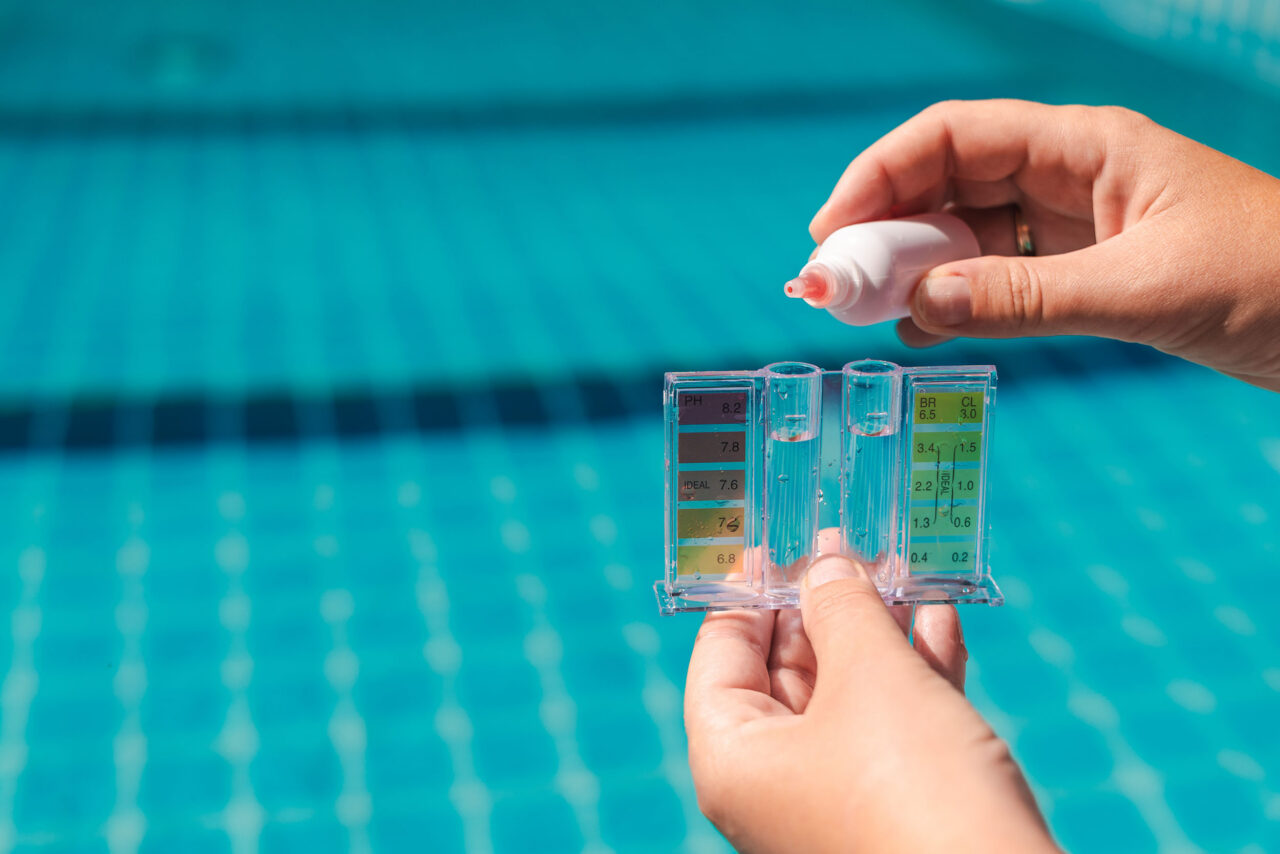
Correct dosing begins with pool volume, so accurately calculating gallons in a commercial pool is critical. Advanced water testing kits and controller readings help operators spot changes before water quality drops. Still, automation calls for calibration, equipment maintenance, and trained oversight.
Challenges of Managing Commercial Pool Chemistry In-House
In-house teams face fast water changes during peak seasons, pool opening, swim meets, holidays, and heavy daily use. Supplies, feeders, testing tools, pool safety covers, and cleaning equipment all require attention before swimmers arrive, and even skilled maintenance staff can struggle when testing schedules are inconsistent.
Human error is another common element. A staff member might misread a test, dose before pool pumps are running, add the wrong product, or store incompatible chemicals too close together. Aging feeders, clogged lines, and delayed repairs can exacerbate problems. Over time, these gaps drive up chemical use, labor time, service calls, and pool maintenance costs.
Risks of Improper Chemical Balancing
Improper balance can quickly move from a water-quality concern to a health, equipment, or compliance issue.
Swimmer Health & Safety Risks
Low sanitizer can let bacteria rise to unsafe levels. High combined chlorine creates strong odors and respiratory discomfort, especially for indoor pools. Poor pH balance can cause eye and skin irritation, while cloudy water can make it harder for lifeguards and pool cleaners to see the pool floor clearly.
Equipment & Infrastructure Damage
Unbalanced water can corrode plumbing, ladders, handrails, heaters, and metal components. When these issues are ignored, they can turn into common commercial pool repairs that cost more than routine prevention.
Operational & Compliance Risks
Commercial pools must follow all applicable state and local swimming pool regulations, inspection rules, and documentation requirements. Reviewing commercial pool chemical storage regulations helps facilities reduce risk, protect staff, and prepare for inspections.
Benefits of Partnering with a Commercial Pool Service Provider
Since heavy pool use can shift readings quickly, a professional service partner brings routine testing, trained technicians, documentation, and a more reliable process for correcting water chemistry.
Professional oversight also helps reduce chemical waste. Technicians can pinpoint the real cause, such as filtration issues, low sanitizer, poor circulation, high calcium, algae, or controller problems. They can also review feeders, pumps, controllers, and commercial pool water treatment systems to see whether the equipment still fits the facility’s use. For HOAs, hotels, clubs, and aquatic facilities comparing local pool maintenance services, proven commercial experience goes a long way.
Best Practices for Commercial Pool Chemical Management
Stable pool water starts with following a consistent process. Facilities should test water on a set schedule, record readings, verify feed equipment, maintain circulation, clean filters, and act accordingly when readings move out of range.
Staff should be trained in chemical safety, safe chemical handling practices, PPE requirements, label instructions, Safety Data Sheets, and emergency procedures. Chemical storage solutions should separate incompatible products, keep containers dry, and limit access to trained workers.
Facilities can also minimize the environmental impact of pool chemicals through accurate dosing, leak prevention, water conservation, efficient filtration, and prompt repair. Eco-friendly pool maintenance is all about using the right amount of product, keeping systems tuned, and preventing avoidable waste.
How Aqua Management Partners Helps Commercial Pools Maintain Proper Water Chemistry
Aqua Management Partners provides professional water testing, chemical balancing, equipment inspections, automation support, and compliance-focused maintenance programs. AMP can craft a service plan around your pool size, bather load, equipment condition, staffing, and local requirements.
For teams seeking stronger in-house skills, AMP offers commercial pool technician training focused on testing, dosing, safety, and daily maintenance. For broader support, AMP’s commercial pool services help facilities manage water quality, maintenance planning, repairs, and seasonal demands.
Professional Chemical Management Protects Commercial Pools
Adding chemicals to commercial pools should be accurate, well-documented, and tailored to real water conditions. Commercial pool chemistry requires regular attention as pool use, weather, equipment performance, and contaminants change constantly.
Professional partners help you reduce risk, limit overcorrection, and keep your pool water ready for swimmers. For fewer surprises, better records, and stronger water-quality control, professional testing and maintenance are the best next step.
